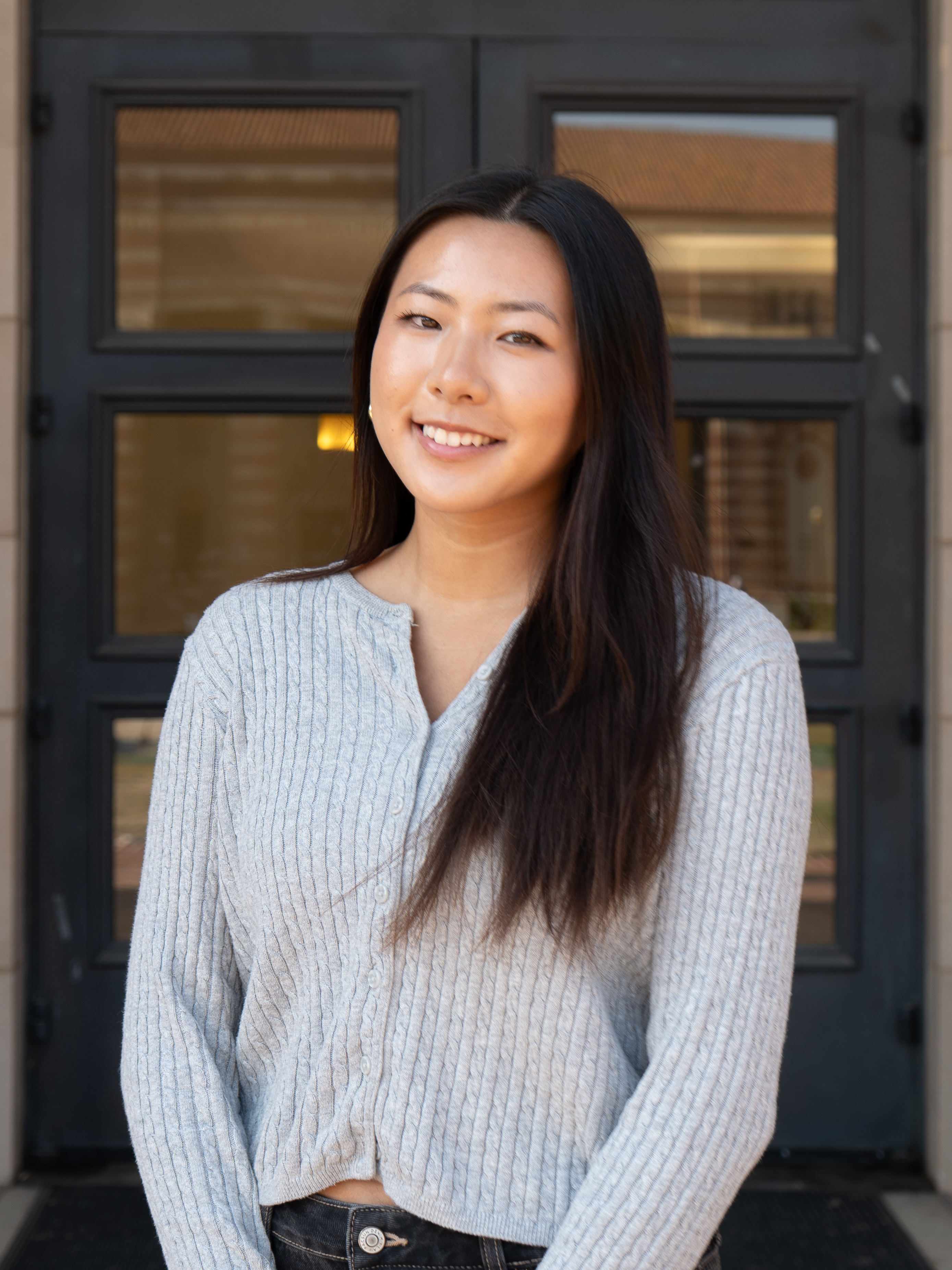
“It was just a lump,” she recalled. “Like I wasn't hurting or anything, I didn't want to feel like I was sick.”
Fumi Nakano thought the lump in her breast was harmless—at least that is what the doctor told her. She had always been wary of cancer after her mother passed away from ovarian cancer, but the doctor’s words provided enough reassurance for Fumi to continue living her life as normal.
Less than a year later, the newlywed received her breast cancer diagnosis; only now, she was pregnant. During a pregnancy checkup, the lump lingered in her mind, prompting her to voice her concerns. While just a precaution after the initial dismissal, the situation escalated after the biopsy showed the lump was cancerous. Her pregnancy, once joyous news, became an epicenter of fear, uncertainty, and heartbreak.
Daunting decisions loomed over Fumi as she discussed treatments with the doctors. They needed to act quickly, as the cancer had already reached stage three or four. But every question and thought in Fumi’s mind revolved around the child she was carrying. How would she protect the baby?
For Fumi, in a time of uncertainty, the baby represented a future: a life that she wanted to provide. “I was kind of determined that I was going to have the baby no matter what,” Fumi said, remembering her careful discussions with her husband. She would prioritize her baby’s health over anything, even if it meant postponing her surgery and risking her own health to ensure the baby was developed enough to remain unharmed.
“I was kind of determined that I was going to have the baby no matter what,”
Fumi’s lumpectomy was successful in removing the cancerous growth from her breast, and her first child was born without further complications. However, because the cancer had spread, Fumi still needed to undergo chemotherapy and radiation treatments.
Throughout the taxing treatments, Fumi’s mind remained on her family. She thought about her husband, her newborn daughter, and the rest of her life. Cancer forced her to face the uncertainty of the future, making each second spent with her family more important than the last. She realized she wanted to dedicate as much of her time to them as she could. Though cancer brought uncertainty, she decided that she wanted to have more children as soon as she was able to. “I never knew what was going to happen to me afterwards,” she said. And she did just that, having two more children after completing her treatments.
Shortly after her first daughter was born, Fumi made the decision to leave her job to spend more time with her family. She had been working in Tokyo as a stock loan trader at Goldman Sachs. Despite the extensive hours in the office and frequent business dinners, she enjoyed her work and the life she created for herself. However, after facing the possibility of a limited future with her children, she resolved that being present for her family was more important. She believed “the family was like a more than good enough reason to leave the company, leave the work.”Although it was difficult to leave the position, during this time, every moment spent with loved ones mattered.
A little over ten years after her initial diagnosis, Fumi’s cancer returned. Now, in a new phase of her life, after immigrating from Tokyo to New Jersey, her mentality had remained the same: family first. Though physically, the cancer reappeared in the same way, as an inconspicuous lump, this situation was different. Her dedication to protecting her kids even led her to keep her second diagnosis more private.
“I did tell some people, but not many people, because I didn't want my kids to worry about me,” she recalled. She feared that if many others knew, her children would be constantly asked about their mother’s health instead of being treated like regular kids. She just wanted them to continue life as they had prior to the diagnosis.
Fumi admitted that, though it was difficult to think optimistically at times, projecting positivity to her children actually helped her believe in herself. Focusing on her kids prevented her mind from wandering to worst-case scenarios; instead, she was able to cherish her time with her family.
Even through the treatments, Fumi remained heavily involved with her children’s lives and extracurriculars. Whether it was weekly practices or weekend games, Fumi would always be there to watch her kids or just drive them to their activities. There was never a time when she let her treatments interfere with her close relationship with her children.
Shortly after her diagnosis, Fumi tested positive for a BRCA1 mutation. BRCA1, also called Breast Cancer Gene 1, is a tumor suppressor gene, and when mutated, is commonly associated with breast and ovarian cancer according to the National Cancer Institute. Having inherited the BRCA1 mutation from her mother, who had both breast and ovarian cancer, Fumi was aware of the risks of recurrence. This discovery led to Fumi’s decision to receive a total mastectomy, the removal of both her ovaries, both breasts, and to remove both of her ovaries.
The “fundamental” markers of motherhood were ultimately the cause of Fumi’s suffering. However, Fumi said their removal did not impede her identity, both as a woman and a mother.
Prioritizing her children throughout her experience with breast cancer was not a difficult choice for Fumi. In her eyes, motherhood was inseparable from protecting her family.
As she explained, “I [felt] like that was my job to protect my kids.” Her “job” of motherhood was unlike any professional work she had done at Goldman Sachs; work was now measured through care and responsibility rather than salaries and positions. Cancer emphasized this role, with Fumi needing to care for both her children and her own health. Fumi’s approach to illness was rooted in love but was also made possible by the life she created for herself. Any sacrifice she had to make for her children was not a sacrifice at all; it was just her expression of love.
Today, now cancer-free, Fumi continues to live her life with her heart devoted to her family.