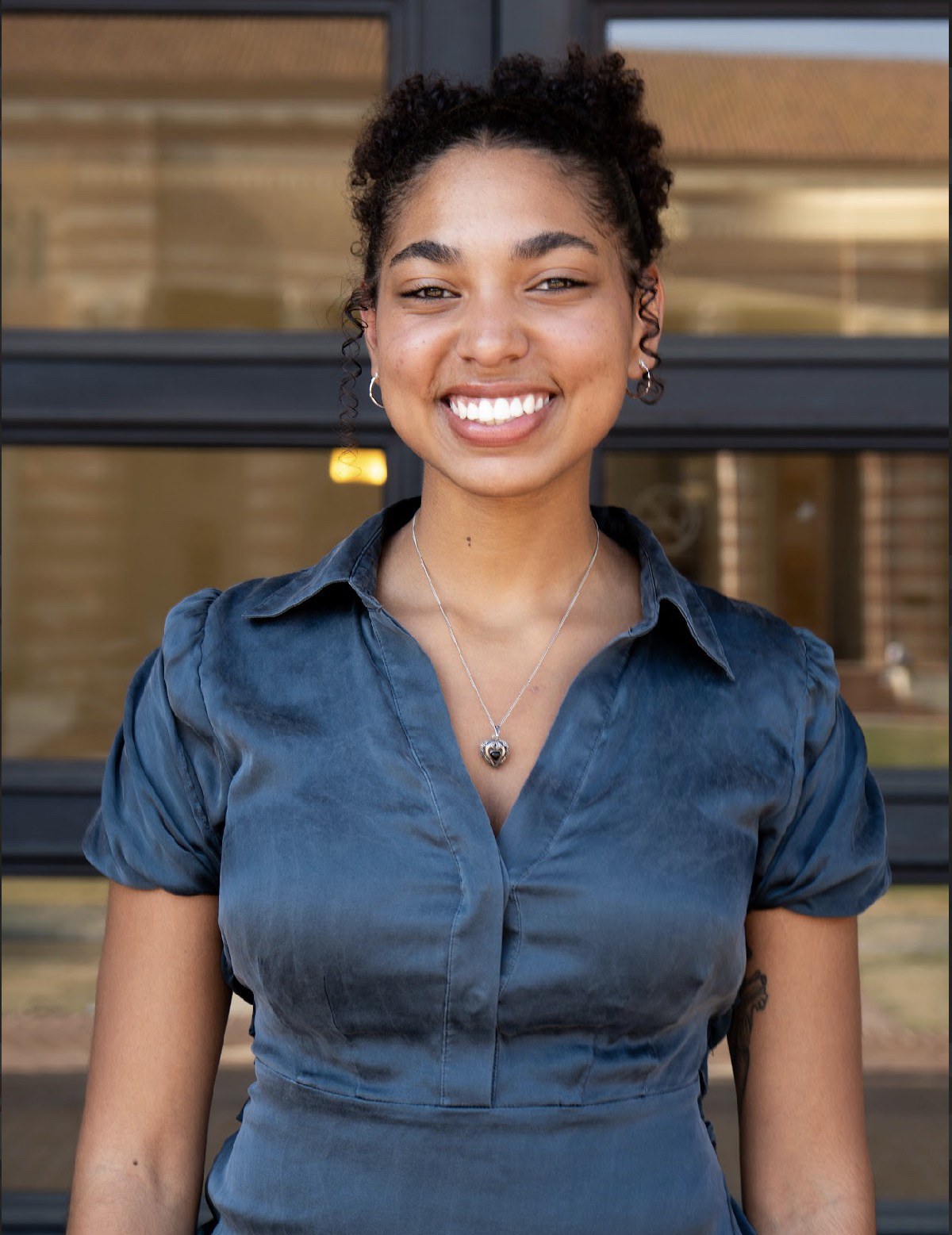
Marlene began her year with a vision board. She turned to her faith and asked, “Lord, what do you have for me this year?” The answers she received, guided by her scriptures, pointed to something big.
At the age of 53, Marlene was diagnosed with endometrial cancer and informed that she needed to have surgery immediately. Though she had just received a potentially life-altering diagnosis, her first thought was, “How do I tell my family?” Like Marlene, her mother had felt that something big was coming. Prior to the diagnosis, Marlene’s mother kept repeating to her, “One of you is sick unto death, and you’re not telling me,” without a doubt in her mind that a storm was brewing.
Marlene was very meticulous about planning how and when she bore the news to people; it was essential that everyone heard directly from her. The first person she told was her boss, whose sister happened to be a nurse navigator who could help. Marlene’s support system was only growing.
Fortunately, Marlene’s doctor was able to offer her a spot for surgery in just four days, forcing her to make a decision quickly.
When she went to the office to complete her pre-op tests, she felt like something was holding her back. When she arrived at the hospital, she struggled to find a spot in the 57-acre lot. She told her mom, “My personal valet is not on duty today,” yet she felt urged by the Holy Spirit to circle the parking lot one more time. When she did, she found the perfect parking spot just a crosswalk away from the building. After finishing her labs and tests, she felt steered toward a different exit. Her mom contested, “No, we came in this way.” But Marlene continued following what felt right. Walking down the hall, she saw someone and immediately knew it was her boss's sister. Despite having never met her before, she asked, “Excuse me, are you Giovanna’s sister?” It turned out that she was.
Everything was aligning perfectly. “If I hadn’t found the parking spot, or if I had to go to the lab first instead of getting the EKG done first. If the guy had found my veins immediately when I sat down, if I had gone out the way that I came in, I would have missed her. All these things, it reminded me, God saying: “Don’t fear, I’m going to go ahead of you. I’m going to prepare the way ahead of you. I’m going to take care of you.’”
“Don’t fear, I’m going to go ahead of you. I’m going to prepare the way ahead of you. I’m going to take care of you.’”
Marlene met her surgeon during her online pre-op. She learns that he is Christian, and they pray together before her surgery. Hysterectomies require four to six weeks of strict care post-op. About a month post-op, Marlene had a few complications. The doctor who walked her through this period encouraged and helped her receive the time off she needed from work.
She says, “Doctors don’t do that anymore these days. He was one of the kindest people I have ever met.” She explains that oftentimes, if you don’t know how to navigate the system, you get dismissed. Luckily, Marlene is a registered nurse and has this insight. She asks herself, “What happens to the people who aren’t in the system, who don't know the questions to ask, the tests to ask for, the things to push for? I worry about those patients.”
No chemo, no radiation and just surgery, Marlene is now two years cancer-free. Her doctor kept telling her, “You’ve been through a lot.” To which she responded that it never felt like that. She points towards her faith, saying, “God guided me through it.” During recovery, Marlene focused on finding a new norm and discovering her limits.
Though she was unsure of what it would look like, she still felt grateful because “the story could have been a lot different.”
Just five hours away, Marlene’s daughter Kayli was in the middle of her movement class at UC Santa Barbara. After completing the piece she was working on, she sat down, her head spinning, unable to speak. Kayli was dismissed from class and went to the emergency room.
Kayli had lived with anemia for 21 years, believing it was just something she would live with for the rest of her life.
When Kayli arrived at the hospital, the care team decided the first step was to do a comprehensive blood test to check her iron levels. Despite these tests, doctors still lacked an answer for why Kayli was experiencing such severe symptoms. Their main concern was deciding on a way for her to maintain her iron levels. Kayli’s best bet was to begin a birth control plan that would use hormones to lighten her period and result in more stable iron levels. To start the birth control plan, Kayli needed to meet with an OB-GYN.
During her visit with her mom, Kayli’s doctor told her, “You have thalassemia.”
Thalassemia is a blood disorder that is inherited from parent to offspring and leads to less hemoglobin in the body, disrupting the flow of oxygen, according to the Mayo Clinic.
Everything began to make sense to Kayli and Marlene: their family's history of anemia and Marlene’s history of heavy bleeding and blood clots. Marlene acted immediately and was tested for thalassemia. Though Marlene had primarily positive experiences receiving treatments, it wasn’t until her daughter began to experience similar symptoms that they discovered the root of these conditions.
Kayli treated her thalassemia with iron infusions. She reacted poorly to the dosage of her first iron infusion, describing it as “the scariest thing that had ever happened to me.” Her dose was adjusted accordingly, and Kayli felt an improvement in her energy levels and overall motivation by the end of summer.
If it weren't for the advocacy Kayli had from her mom, she may have been “dismissed,” like many other young people. She continues to have her iron levels checked routinely, exercise and eat well. She says, “Out of this entire thing, just paying attention to how my body was feeling was the most important thing.”
As for Marlene, she continues to live every day to the fullest. She says, “I have a responsibility if I want the future to look a certain way, to pour back into the young people who are now coming up behind me. I don’t take tomorrow for granted — it’s not promised — so let’s use each day as if it’s your last day.”
“I have a responsibility if I want the future to look a certain way, to pour back into the young people who are now coming up behind me. I don’t take tomorrow for granted — it’s not promised — so let’s use each day as if it’s your last day.”